
Air travel disruption in 2026: What Uncertainty Means for Time‑Critical Events

Air travel in 2026 continues to be challenging. While demand remains high, airlines are operating in a complex environment shaped by geopolitical uncertainty, fuel price volatility and ongoing operational pressure.
For organisations working across sport, media and entertainment, where travel is time‑critical and schedules are fixed, these challenges carry even greater impact.
Events run to fixed schedules. Races start, matches kick off and broadcast windows stay locked – regardless of delayed flights or disrupted journeys.
From International Championships to touring productions, success depends on athletes, crews, talent and support staff arriving exactly when needed. Well‑managed travel has become a key part of delivering successful world-class events.
What’s driving today’s air travel challenges?
A combination of factors continue to affect the reliability and cost of air travel. Capacity remains tight on many long‑haul routes, particularly for premium cabins, while fares are fluctuating significantly, especially for last-minute bookings.
At the same time, geopolitical developments are influencing airline operations and supply chains. Disruption in parts of the Middle East has brought renewed attention to aviation fuel security, prompting questions from organisations planning international travel for teams, crews and talent.
Fuel shortage concerns
Fuel supply has been widely discussed in recent weeks following disruption around the Strait of Hormuz. While these developments naturally attract attention, the wider aviation industry has stated that these risks are being monitored closely.
Airlines and authorities continue to point to resilient supply chains and well‑established contingency planning for situations like this. With plenty of experience in navigating geopolitical complexity, and there is currently no guidance suggesting a need to pause or restrict travel.
For sports, media and entertainment organisations, this reinforces an important point: travel can and should continue, but it needs to be planned carefully. Working with specialists who are actively monitoring developments and can respond quickly if conditions change, provides you with reassurance in a time of uncertainty.

Why sports, media and entertainment travel is different
Travel in these sectors comes with unique pressures. Trips are often non‑negotiable, tied to live schedules, booked at short notice or the need for last minute changes. They often involve groups moving together with very specific arrival requirements.
When disruption happens, independently booked travel can quickly become a problem. Rebooking flights, finding viable alternatives or managing unexpected costs may fall to the traveller, operations, travel or tour managers, when their attention should be on the upcoming event.
How a travel management company supports your team
In time‑critical industries, a specialist travel management company (TMC) plans with disruption in mind, designing travel programmes that protect fixed schedules and immovable deadlines.
When flights are delayed, cancelled or rerouted, a TMC can act immediately, drawing on sector knowledge, live operational monitoring and supplier relationships to find workable alternatives. In high‑risk scenarios, this may mean switching from scheduled services to charter aircraft, rebuilding manifests at pace or rerouting around restricted airspace to meet immovable arrival deadlines. Last minute accommodation changes may also be required.
During the Middle East airspace crisis earlier this year, this approach enabled Formula 1 personnel travelling to the Australian GP to be successfully rerouted. Within hours of cancellations, alternative commercial routes were assessed, charter aircraft secured and safe flight paths engineered around restricted airspace, ensuring all personnel arrived before operational cut‑off, with no disruption to the event itself.
Cost management is just as important. In a volatile airfare market, a TMC helps keep budgets under control by accessing negotiated and specialist fares, ensuring bookings align with agreed travel policies, and providing clear reporting across tours, seasons or productions. This visibility becomes especially valuable when travel is spread across multiple destinations and events.
Support when things don’t go to plan
Disruption rarely happens at a convenient time. For travelling teams and crews, issues often arise out of hours or overseas, when support can be difficult to access.
In high‑pressure situations, calm, decisive and human support makes the difference. During recent large‑scale disruption, our dedicated response teams were deployed to monitor risk, liaise directly with airlines and communicate proactively with clients, often before formal cancellations were announced. Clear, regular updates allowed decisions to be made quickly and confidently, even as conditions changed hour by hour.
This level of support allows travellers to stay focused on what they are there to do, rather than trying to rearrange flights or accommodation under pressure.
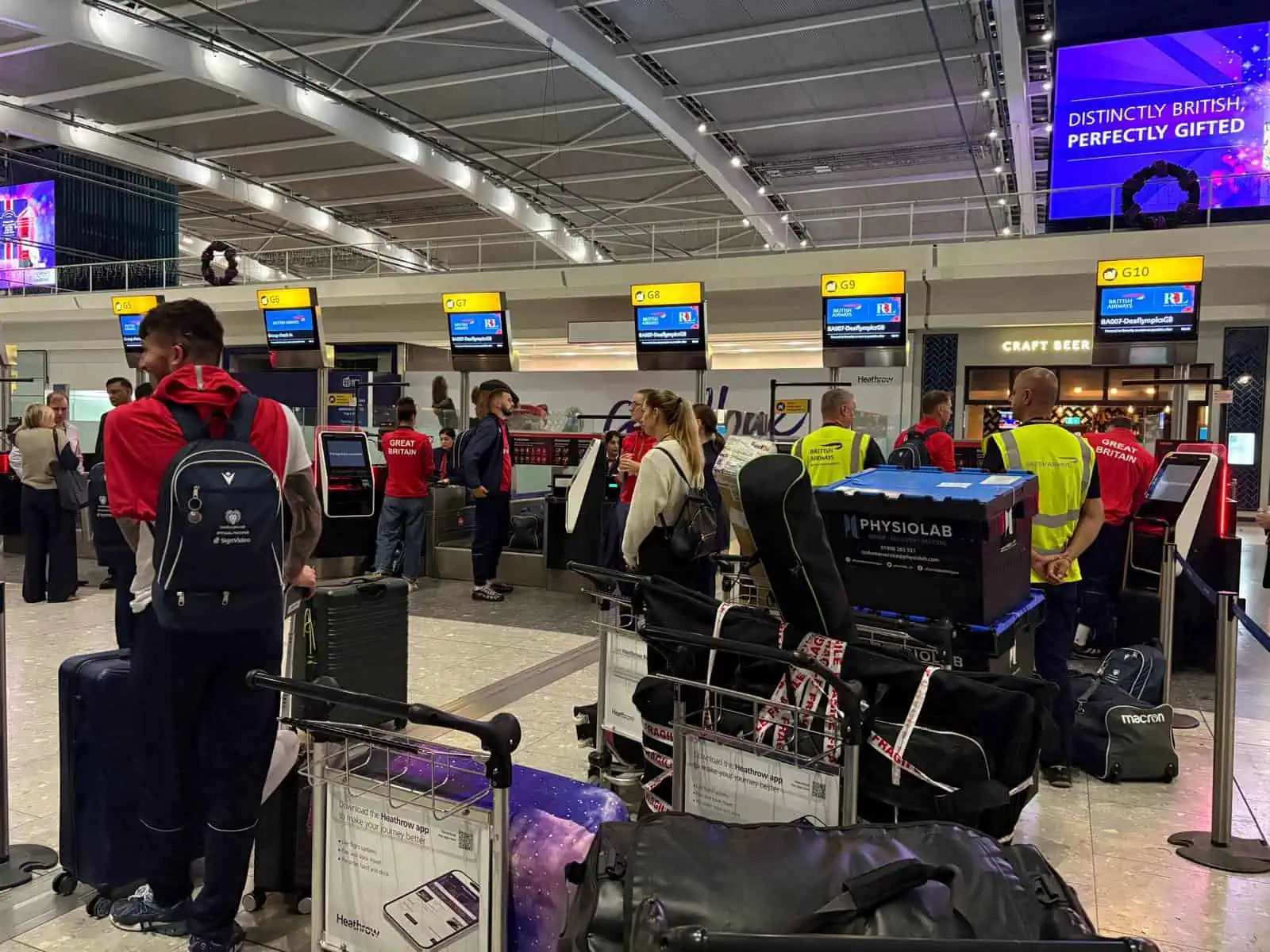
Our approach to travel management combines in‑depth sector knowledge with long‑standing industry relationships, which provides our clients with confidence and choice even in a volatile environment.
Access to negotiated and group rates for scheduled flights, alongside the capability to deliver large‑scale charter programmes when required, allows travel plans to remain flexible without compromising timelines or safety. Whether navigating geopolitically sensitive airspace or operating within strict regulatory or biosecure environments, this depth of experience ensures continuity when standard travel solutions fall short.
Travel in 2026
If you manage travel for a sports, media or entertainment organisation and would like to discuss your travel requirements, please get in touch.