Why more sports teams are choosing rail travel

Not long ago, flying was the automatic choice for most domestic and short-haul European fixtures. While that’s still very much the case for many teams today, attitudes across elite sport are evolving. Travel decisions are becoming more considered, with organisations thinking carefully about sustainability targets and public perception alongside athlete recovery and preparation.
- Is flying the most efficient option for this journey?
- Can we reduce disruption for athletes where possible?
- Are there opportunities to align travel with sustainability targets?
In many cases, flying continues to offer the speed, flexibility and coverage teams need – particularly for tighter schedules and longer distances. But for certain routes, rail can provide a strong alternative worth considering.
While rail won’t replace air travel, and it isn’t suitable for every fixture or event, it can be a valuable addition to a well-planned travel programme.
Why rail is becoming part of the mix
For fixtures and events in well-connected cities, rail can sometimes offer a smoother alternative to short-haul flights.
Flying remains the fastest option for many journeys. However, when factoring in airport processes such as check-in, security, baggage handling and transfers, total journey time can become more comparable, particularly for large travelling groups.
Rail can reduce some of that complexity. City-centre to city-centre connections and simpler boarding processes can help streamline travel in specific scenarios, especially during busy competition schedules.
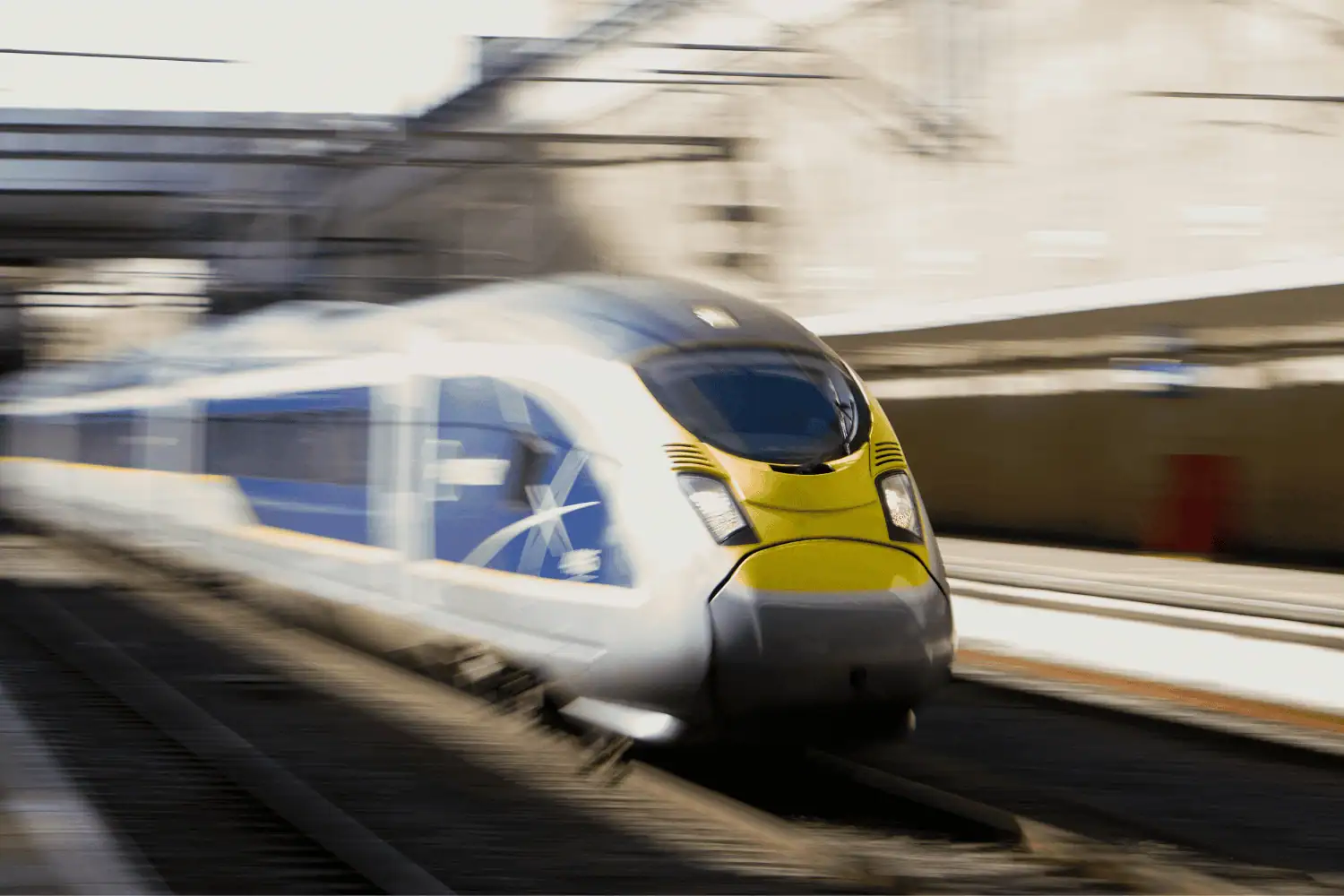
Across Europe, expanding high-speed rail networks are also increasing the number of viable rail routes between major sporting destinations.
The athlete wellbeing factor
Air travel continues to play a critical role in elite sport logistics, but rail can offer some additional benefits for athlete comfort on certain journeys.
Train travel allows players and staff to move more freely, stretch during travel, and avoid extended periods seated in one position. For some teams, particularly during congested schedules, that can support recovery and comfort.
Reserved carriages can also provide privacy and allow squads to maintain routines, hold informal meetings, or prepare for upcoming fixtures in a more relaxed environment.
Sustainability and smarter travel choices
Environmental responsibility is now firmly part of the conversation in professional sport, and travel is one of the most visible areas where organisations can make changes.
That mindset is becoming increasingly common.
Team GB and Paris 2024
The Paris 2024 Olympic and Paralympic Games were a strong example of how rail and air travel can work together within a major travel programme.
We’ve supported Team GB across multiple Olympic cycles over the years, giving us first-hand insight into how complex sports travel requirements are evolving. With Paris 2024 aiming to be the greenest Games in Olympic history, sustainability played a major role in travel planning.
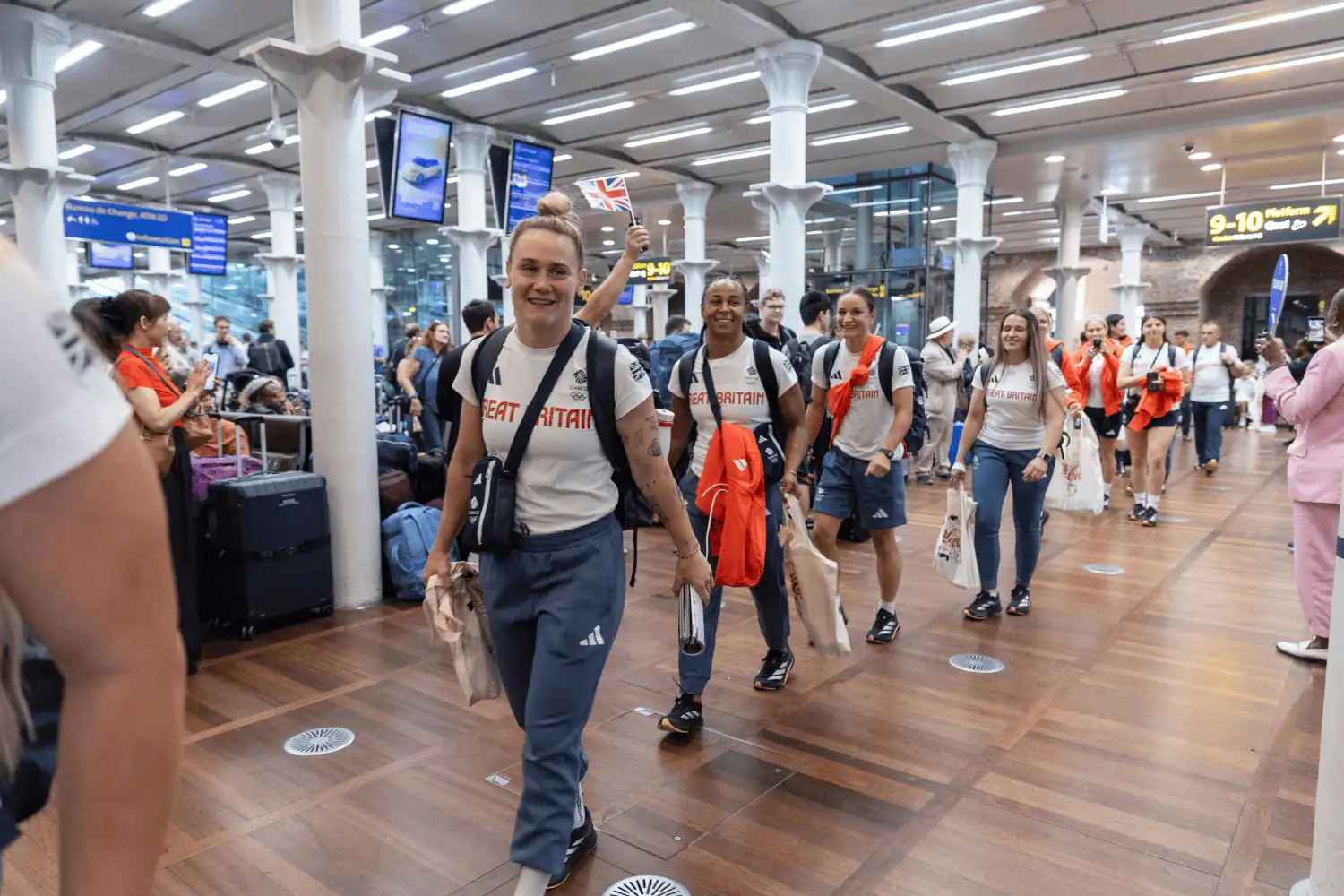
With Paris easily accessible via Eurostar, rail became an important part of Team GB’s travel strategy. We secured return rail travel for 1,200 members of the Team GB delegation travelling to the Olympics, working closely with Eurostar and Team GB staff to coordinate their travel requirements.
In the lead-up to the Games, we also collaborated closely with Eurostar to help refine booking and budget tracking processes, making it easier to manage travel spend and reporting across such a large delegation.
Paris 2024 showed how integrating rail can support both operational and sustainability goals without compromising overall performance.
When rail can work well
Rail is best considered as part of a broader travel mix. It can be particularly effective for:
- Domestic fixtures
- Short European journeys between major cities
- Multi-city tournaments with strong rail connections
Looking ahead
As sustainability standards continue to evolve across sport, teams are likely to take an increasingly flexible journey-by-journey approach to travel.
At Travel Places, we work closely with teams, governing bodies, and event organisers to build travel programmes that balance environmental responsibility with athlete welfare, logistics and performance.